As anyone who has followed this blog knows, I believe one of the benefits of doing some of your running barefoot is helping to improve your form. Watch this short video from Merrell on what professional trainer Walt
Reynolds calls "bare form" for a clear demonstration..
Showing posts with label barefoot. Show all posts
Showing posts with label barefoot. Show all posts
Saturday, June 2, 2012


Saturday, May 26, 2012
Barefoot Running Study - Blog Post
I came across this blog post from Don Stoner's thatlinuxbox.com, where he participated in a study at the University of Florida "to compare how many calories are used and how much force is produced
when the feet make contact with the ground while barefoot compared to
wearing cushioned shoes."
It seems to verify what I have thought about the value of barefoot running, which is that it's a great way to work on your form and strengthen your legs and feet, a tool you can use to improve your overall running. And it's fun and feels good! Interesting reading!

It seems to verify what I have thought about the value of barefoot running, which is that it's a great way to work on your form and strengthen your legs and feet, a tool you can use to improve your overall running. And it's fun and feels good! Interesting reading!

Tuesday, May 1, 2012
Going Barefoot.. and the Kenyans
To add to yesterday's post on going to a more minimalist shoe, I want to talk a little about barefoot
running.
 There's SO much controversy around this subject right now. I am neither "for" nor "against." (You can read all my posts on barefoot running by going to "Labels" in the right column and clicking on "barefoot.") Whether you do or don't depends on your own history and if you want to or not. For instance, if you don't even walk around your house barefoot, you should start there... walk around the house barefoot. Then you can start doing some barefoot walking outside, or walking with some kind of protection for the bottoms of your feet. My preference is Steven Sashen's huaraches, his Invisible Shoes (see box to the right). Or you can go with Vibram FiveFingers, which there are many different models to choose from now. Amazon.com has them:
Barefoot enthusiasts say to start by running on grass, which is great! Except here in SoFL, where the grass is not really grass. It's essentially what we called crabgrass in Iowa. It is not soft; it is coarse and tough, and the ground is hard and bumpy... has to be tough to survive the Florida sun, climate and soil. So, here in SoFL, running on just any old grass, IMHO, is not really the way to start. You're going to have to go to a golf course or something like that. Now, walking (and eventually running) on the beach, yes. But, there again, if you don't or haven't done much of it, you really have to start out very slowly, walking maybe 10-15 minutes and going from there.
A new book is coming out, I believe May 15 is when it will be available, about Kenyan running, Running with the Kenyans: Passion, Adventure, and the Secrets of the Fastest People on Earth by Adharanand Finn. I was reading a review, can't remember where now, but it was saying that although the elite Kenyan runners all race in very minimalist racing shoes, they train in regular cushy trainers. They get their perfect form from running barefoot as children growing up--which they keep, whatever shoe they are running in. It's about form, a shortened stride, and landing mid- to forefoot, which is what barefoot (or minimalist shoe) running can help you with.
I have pre-ordered a copy of the book from Amazon.com; you can too:
Wednesday, February 15, 2012
Sh*t Barefoot Runners Say - from Steven Sashen
I wear and promote Steven Sashen's huaraches (see ad in the column to the right), and I LOVE them. He has made a video in the "Sh*t _______________ Say" wave that's going around; his is:
"Sh*t Barefoot Runners Say." It's pretty funny! Here it is, enjoy!
"Sh*t Barefoot Runners Say." It's pretty funny! Here it is, enjoy!
Thursday, November 3, 2011
New Article by Christopher McDougall... 100-Up
I read this article by Born to Run author Christopher McDougall in yesterday's New York Times: The Once and Future Way to Run. The gist of what he's saying, I believe, is that it's not necessarily the running barefoot, though the contention is still that we don't need all the cushioning and anti-pronation devices of the modern-day running shoe, but running with correct form that makes the difference in whether you're going to wind up with running injuries. And barefoot (or nearly barefoot) running can help your form.
Then he goes on to talk about something called "100-Up," an exercise devised in 1874 by a 16-year-old boy in England trying to become a miler. Here is how it's described by McDougall:
I posted a little about Christopher McDougall's book Born to Run and barefoot running back in 2009 (see Archives Sept and Oct 2009). He's an excellent writer.. the book is really entertaining and fun to read. Read the Times article, and then read the book, Born to Run: A Hidden Tribe, Super Athletes, and the Greatest Race the World Has Never Seen. You can get a copy of it here:
Then he goes on to talk about something called "100-Up," an exercise devised in 1874 by a 16-year-old boy in England trying to become a miler. Here is how it's described by McDougall:
I snapped a twig and dropped the halves on the ground about eight inches apart to form targets for my landings. The 100-Up consists of two parts. For the "Minor," you stand with both feet on the targets and your arms cocked in running position. "Now raise one knee to the height of the hip," George writes, "bring the foot back and down again to its original position, touching the line lightly with the ball of the foot, and repeat with the other leg."
That’s all there is to it. But it’s not so easy to hit your marks 100 times in a row while maintaining balance and proper knee height. Once you can, it’s on to the Major: "The body must be balanced on the ball of the foot, the heels being clear of the ground and the head and body being tilted very slightly forward. . . . Now, spring from the toe, bringing the knee to the level of the hip. . . . Repeat with the other leg and continue raising and lowering the legs alternately. This action is exactly that of running."Well, what's interesting to ME about this is that I have been doing similar exercises lately in my physical therapy sessions to get me back to running. I mentioned some weeks ago how whacked out my whole leg had become from having the disease go undiagnosed in my hip for so long and it changing the way I walked and ran. And now I have had to, first, get my leg turned back straight and my foot to step all the way down (yes, it really was that bad--and still not there yet). Lately, I have been doing more dynamic exercises, some kinda like the ones mentioned above... cool!
I posted a little about Christopher McDougall's book Born to Run and barefoot running back in 2009 (see Archives Sept and Oct 2009). He's an excellent writer.. the book is really entertaining and fun to read. Read the Times article, and then read the book, Born to Run: A Hidden Tribe, Super Athletes, and the Greatest Race the World Has Never Seen. You can get a copy of it here:
Tuesday, August 23, 2011
A Conversation with Dr Lieberman
Here's an interesting Q&A with Dr Daniel Lieberman and The New York Times: http://www.nytimes.com/2011/08/23/science/23conversation.html?_r=2&pagewanted=1
Dr Lieberman is a professor and researcher at Harvard University's Dept of Human Evolutionary Biology, and is one of the front runners of the barefoot running movement. I mentioned him in a couple of past posts (http://www.run2joy.com/search/label/Daniel%20Lieberman)
Read and enjoy...
Dr Lieberman is a professor and researcher at Harvard University's Dept of Human Evolutionary Biology, and is one of the front runners of the barefoot running movement. I mentioned him in a couple of past posts (http://www.run2joy.com/search/label/Daniel%20Lieberman)
Read and enjoy...
Wednesday, June 8, 2011
Another Opinion on the ACSM Symposium on Barefoot Running
I found another post about the discussion of barefoot running at the ACSM's annual meeting. This one is from the New York Times Health section, written by Gretchen Reynolds. She brings in a couple other studies done last year on how shoes affect children's gait.
One study (http://www.ncbi.nlm.nih.gov/pubmed/21244647) found that, "with shoes, children walk faster by taking longer steps with greater ankle and knee motion and increased tibialis anterior activity. Shoes reduce foot motion and increase the support phases of the gait cycle. During running, shoes reduce swing phase leg speed, attenuate some shock and encourage a rearfoot strike pattern."
The other study Reynolds mentions is one done by Dr Daniel Lieberman on Kenyan children. He compared children in an urban setting, who typically wore shoes most of the time, to those in a rural setting, in which the children were mostly barefoot (http://www.ncbi.nlm.nih.gov/pubmed/20111000). He found that most of the city kids, when running, landed on their heels resulting in greater impact forces; whereas the barefoot rural kids landed more mid- and forefoot with less impact.
But, as pointed out in Dr Tucker's post in his blog The Science of Sport, that doesn't mean we all should ditch our shoes and run barefoot all the time. According to Allison Gruber, lead author of another study done at the University of Massachusetts showing how impact forces are lesser when footstrike is mid- to forefoot, the “evidence is not concrete for or against barefoot or shod running. If one is not experiencing any injuries, it is probably best to not change what you’re doing.”
Then again, if you do experience a lot of running injuries, you might want to try the minimalist approach. The key, according to all of these experts, is to move into either a less constructed shoe or barefoot gradually. Dr Lieberman suggests you, "remove your shoes for the last mile of your usual run and ease into barefoot running over a period of weeks." It all depends on the individual, how fast or slow they should move into the minimalist shoe or barefoot running, but I would err on the side of caution. Dr Lieberman also mentions form--running with a shorter stride and landing lightly. As I tell all my runners, "run tall, run relaxed, run easy."
Tuesday, June 7, 2011
New Research on Barefoot Running vs Shoes
My new runner Tom directed me to this post by Dr Ross Tucker on his blog, The Science of Sport (http://www.sportsscientists.com/2011/06/barefoot-running-shoes-and-born-to-run.html). He writes about a recent meeting of the American College of Sports Medicine (ACSM) where the topic of barefoot running was discussed. Two top scientists in the field, Dr Irene Davis and Dr Daniel Lieberman, presented new research they have done (http://www.ncbi.nlm.nih.gov/pubmed/20111000). For anyone thinking of trying the more "minimalist" approach to running--barefoot, huaraches, minimalist shoes--Dr Tucker's post is a must-read.
Wednesday, July 21, 2010
Inspiration
For a little inspiration please visit RunBare (http://www.runbare.com), a website about barefoot running. Michael Sandler's story is pretty amazing. Go on now, go read it...
Saturday, June 19, 2010
Barefoot Running Controversy Continued
I just found more talk on Steven Sashen's site about the barefoot running controversy, that I didn't see before. Steven's comments are really good. Here is the link: http://www.invisibleshoe.com/348/barefoot-running-is-bad-for-you/comment-page-1/#comment-128
Friday, June 18, 2010
The Barefoot Running Controversy
A few weeks ago I read an article by Matt Fitzgerald (http://running.competitor.com/2010/05/features/the-barefoot-running-injury-epidemic_10118) about the rise in the number of injured runners from running barefoot. Matt quotes several podiatrists or physical therapists who say they are seeing an increased number of runners with foot injuries caused by barefoot (or nearly barefoot) running. He also recounts his own experience with running in Vibram Five Fingers, becoming injured and quickly returning to regular running shoes. The podiatrists/PT's basically say that most people need a shoe that helps them be able to run, as most of us are not "born to run" as the popular book by Chris McDougall contends, but are biomechanically disadvantaged in some way. Matt ends the article pretty much agreeing with the opinion that running barefoot is not for everyone, or even most of us.
At the time I was entrenched in shower/event preparations (see last post), but I have been thinking a lot about this, and since then have read other people's opinions on the matter also...
From the barefoot running blog I follow: http://barefootjason.blogspot.com/2010/05/barefoot-running-controversy-wtf.html
And from Steven Sashen (Invisibleshoe.com): http://www.invisibleshoe.com/442/hbo-real-sports-on-barefoot-running-right-or-wrong/, who comments on HBO's Real Sports feature on barefoot running.
...all the while continuing to run and walk in my huaraches...
A little background...
I don't (for the most part) do any running in my huaraches on pavement, it's mostly on the trails in the park, which are mulched over a sandy dirt with pine needles and other leaves in places. (There are areas that the only way to get to the next trail is to run on pavement, but not many.) I run about half of my runs in my huaraches; otherwise I wear Nike Frees or Nike Moires. I walk a lot in my huaraches; I wear them for almost all my daily activities outside the home (I go barefoot inside). I have been doing this since the end of April, so it has been approximately eight weeks.
As a kid growing up, I did A LOT of barefoot running/walking.
When I began running at age 37 I ran barefoot on the beach at least once a week... until I couldn't run because of the hip--the hip disease that went undiagnosed for five years (see archives: http://www.run2joy.com/2009/08/my-return-to-running.html) really messed up my whole hip/leg so that I have had to recover/rehab since then.
...and I feel that my feet are getting stronger and my hip/leg issues are getting better.
I want to interject here with something that happened a couple weeks ago. John and I were on a long walk, which we do regularly. I had made a pair of huaraches for him and this was his first time wearing them. Now, this was very dumb of us; I don't know why we did it, except that John regularly runs barefoot on the beach and does these long walks in flipflops with no problem, so I guess we figured he would be okay. He wasn't--got several blood blisters on the bottoms of his feet. So at about two miles out from home, he decided he couldn't go any further, and I said I would run home and get the car and come back for him. I had my huaraches on and took off running and... something really neat happened. It was an asphalt path; I started out pretty slow... and then my form gradually changed, naturally. It was different from my running on the soft trails in the park. I felt I was running closer to the ground, moving over the road. And I had no issues, no pain. It was such a nice little run! It was only a couple miles, and I haven't tried it since then, as I was in Wisconsin just after that, running in shoes; I think I will need to work up to it again.
Now, I want to say that I greatly respect Matt's opinions; he's a scientist and I believe he bases all of his writing on evidence as much as he possibly can. I have quite a few of his books; presently I am reading his Racing Weight and a book he co-wrote with Brad Hudson, Run Faster From the 5k to the Marathon. In his Brain Training for Runners, he praises running in minimalist footware; he tells how he trained, "...as much as 60 miles a week in them... and far from creating any problems of their own, these shoes clearly helped prevent injuries that my previous shoes were contributing to." He says that (at that time, I guess), he also ran in Vibram Five Fingers, and that he is "...fully convinced that minimalist running shoes are less likely to cause injuries than conventional shoes..." He qualifies these statements by saying that all of this "...has not been subjected to formal scientific evaluation."
In his recent article, Matt now says that, "despite easing into virtual barefoot running very slowly, I developed calf, ankle extensor and achilles strains immediately and could not quickly overcome them, so I went back to running full-time in running shoes."
The problem I see here is that he says that he "could not quickly overcome them..."
I have to agree that, of course, there are those who should not run barefoot or in minimalist shoes. Many, many people have biomechanical issues that require special measures that enable them to run. Many people have worn shoes all their lives, never going barefoot either walking or running, and should not expect to be able to run right away, or even after several weeks or months, in minimalist footware. It could take many months or even years of building strength and changing tissue structure to be able to run barefoot.
But, even though I respect Matt's change of opinion (I think that it takes more courage to change your position based on evidence than to just stand by your position based on emotions), I think that, for those who can do so, running barefoot (or nearly) is the way to go. I have seen my form change and my feet strengthened. I don't know that I would ever go completely barefoot when running (things on the road--the "ew" and "ouch" factors), or race in huaraches, but rather use the minimalist footware as a tool to help my overall running.
And, of course, running in huaraches is a whole lot of fun! Isn't that what it's all about anyway?
You just need to be patient and expect it to take as long as it takes.
Saturday, April 24, 2010
My Huaraches from Invisible Shoe - Thank You, Steven!
I'm in Wisconsin now, where we are looking at a rainy weekend and temperatures in the 40's...
It's just a long weekend here, then back home to Florida where it's nice and hot and humid!
A blog I follow, Barefoot Chronicles, recently reviewed running huaraches offered by Steven Sashen and Invisible Shoe (see review here: http://barefootjason.blogspot.com/2010/04/huaraches.html). I have wanted to try huaraches for a while now, so I went to Steven's Invisible Shoes website and ended up ordering a do-it-yourself kit to make my own huaraches. You can also send Steven an outline pattern of your foot and he will make them for you, but I opted to try making them myself, and...
I did it!
My huaraches - thanks, Steven!

They are soooo cool!! It really is like running barefoot, but with a little protective mat under your feet. Your foot is completely free, unlike the Vibram FiveFingers where you have your toes confined in fabric. I love the simplicity of the design and the fact that the huarache style has been around since pre-history, yet Steven uses modern materials (the rubber sole and nylon laces) that work so well.
The trails in the park are mulched and I was worried that mulch would constantly get in between my foot and the sole, but that doesn't happen. The sole kinda conforms to the bottom of your foot; I had no problems with anything getting in between. I am eager to try them in sand, maybe on the trails at Jonathan Dickinson. When we hike on those sandy trails, sand gets in our shoes and ends up at the toe--really annoying. I have worn Teva sandals also, and sand does get in and stays in. So, I will try the huaraches next time we go up there.
I did it!
My huaraches - thanks, Steven!
They are soooo cool!! It really is like running barefoot, but with a little protective mat under your feet. Your foot is completely free, unlike the Vibram FiveFingers where you have your toes confined in fabric. I love the simplicity of the design and the fact that the huarache style has been around since pre-history, yet Steven uses modern materials (the rubber sole and nylon laces) that work so well.
The trails in the park are mulched and I was worried that mulch would constantly get in between my foot and the sole, but that doesn't happen. The sole kinda conforms to the bottom of your foot; I had no problems with anything getting in between. I am eager to try them in sand, maybe on the trails at Jonathan Dickinson. When we hike on those sandy trails, sand gets in our shoes and ends up at the toe--really annoying. I have worn Teva sandals also, and sand does get in and stays in. So, I will try the huaraches next time we go up there.
Thursday, October 29, 2009
Back in Florida... Running Barefoot (or almost)
It's nice to be back in SoFL. I had a fantastic run in the park this morning, on the trails in my Vibram FiveFingers. It has cooled down just a bit and is slightly less humid (but is still pretty hot and humid--just the way I like it!) I also got a pair of Nike Free's for Florida. They are a newer model than the ones I have in Wisconsin, fit slightly different, but are fine.
I found this video on YouTube of Christopher McDougall; he talks about running and his book Born to Run.
Sunday, October 11, 2009
Cold in Wisconsin, Two-a-Day's, and the Beach
It's Sunday and I am in Wisconsin, flew in from South Florida on Friday. It's cold here, three in the afternoon and only 39 degrees! SoFL has had record high temperatures the past week (low 90's) so this is taking some getting used to! I did go for a short run yesterday morning, dressed appropriately (for me, anyhow)--two long-sleeved shirts, tights, hat and gloves. I came upon a young woman running in Vibram FiveFingers, and I just had to talk to her about them! She's been wearing them a few months, she said, and really likes them. She was doing some quarter mile intervals on the pavement in them. I didn't get to talk to her long because her watch went off signalling her to do another one. Pretty cool!
This past week in Florida, I did more trail-running in the park in mine, plus a few barefoot beach runs. And last Sunday morning I met up with Jane after she had run about 40 minutes, to finish her long run with her. Her schedule called for a run of two hours and forty minutes. We had planned that she would run an hour before I joined her, but she got a late start. I did not really know how much I was going to run--was just going to run how I felt. Well, I did the rest of the run with her, a little more than two hours, which was around twelve and a half miles or so for me. It was slow, but it didn't matter. She just had to get the time in on her feet, I just wanted to run as long as I could, and we both enjoyed the time spent with each other.
Back in the "good old days" when Jane and I were doing our hard marathon training, we would do "two-a-days" once a week (and occasionally twice a week) to get our mileage up. We would do seven miles at 5:30 in the morning, get our kids off to school, go to work and work all day, then meet again at 5:30 that evening for another seven miles. We typically would have done a speedwork session on Tuesday with a total of ten to twelve miles, recovery run on Wednesday, a two-a-day (seven in the morning and seven in the evening) on Thursday, off Friday, then a 20-mile long run on Saturday. Those were the good old days!
On Thursday, I did a two-a-day: four miles in the park in the morning in my "froggy feet" (that's what Jane has dubbed my Vibram FiveFingers), then another four miles on the beach late that afternoon. Not exactly like the old days, but the same idea, I guess--getting some more miles in but giving your body a little recovery time in between.
The beach was littered with "moon jellies," a kind of jellyfish that's very common in SoFL. They get stranded on the beach, and the waves can break them into pieces.
A moon jelly on the beach...

Up on the dunes, the sea grapes and beach grasses separate the beach from the road. Here is a beach daisy amongst the sea grapes and grasses...

I didn't bring my "froggy feet" to Wisconsin. I run mostly on a paved "rails-to-trails" path, and I don't think I'm ready for pavement in them. And, besides, the forecast here is continued cold and rain this week. I'm a Florida girl--rather run in heat and humidity than cold rain any day! So, I'll probably do a little less running, more gym work for a while.
Friday, October 2, 2009
Running Barefoot
Okay, so this is about the best thing that's happened in a loooong time in my running.
First of all, before I had surgery on my hip, I would run on the beach barefoot at least once a week. Let me tell you something... my most very favorite place to run is the beach. I love running on the beach! Well, I have been avoiding running on the beach because I figured it would be terribly stressful for my hip and I should not be stressing anything. Then yesterday, I decided I would run on the beach, because, I mean, what the heck, after all the babying I've given my hip/leg... I still hurt.
So, yesterday I did five wonderful miles on the beach--it was great!
My favorite place to run... on the beach

And...



I got the Vibram FiveFingers... and they are just fantastic!!
Ran three miles in them over at the park on the trails--no problem, and I think... I think... because running in them forces me to land midfoot--or even forefoot--that my body stays directly over my feet as I run. I take very quick, short strides, and my pace is slow, but I think it's correcting my form, and eventually the pace will just naturally pick up. It feels like you are barefoot; that is, you really don't feel them on your feet. They protect the bottoms of your feet, but you do feel any bumps you land on. I did not do too much on pavement; will work up to that.
My Vibram FiveFingers... ugly! but very cool!!
Growing up, my childhood was actually perfect for this running that I love to do. I grew up in the Midwest, and as soon as school was out for the summer, we were barefoot. We got a pair of flipflops (we called them "thongs" back then) and a pair of white canvas "tennies" (Keds tennis shoes) that we would wear if we had to wear shoes. But, mostly, we played and went everywhere barefoot. All the kids did. Our days were spent playing outside--jump rope, hopscotch, riding our bikes, swimming at the local pool... and at night we played running games--tag, freeze tag, kick the can, and the like. All barefoot.
When I first began running, it was on the beach, barefoot. I was 37 years old, and enjoyed long walks on the beach. One day I just decided to run a little bit... and that was pretty much it. At the time, I was walking about three miles a day (not just on the beach). I would run as far as I could and then walk; then run again, and walk. After a couple months I could finally run the whole three miles without walking... then I felt I could run forever. I continued my beach runs at least once a week throughout my years of training.
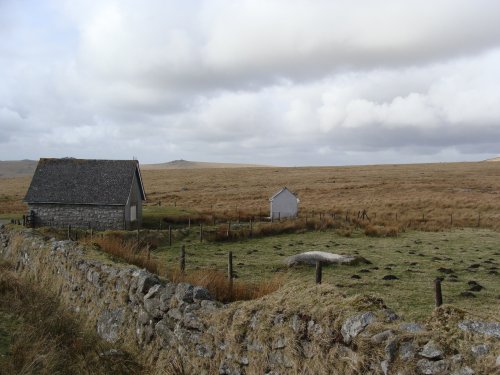
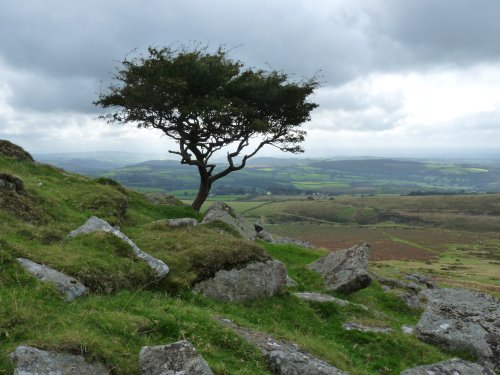
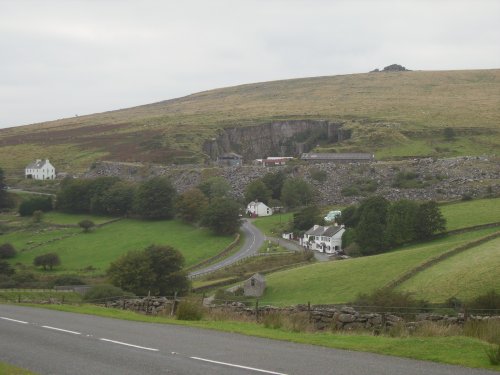
My very first ultra was a 55k in England in 2000, the Dartmoor Discovery 55k. Down in southwest England, the moors are the setting for the Sherlock Holmes books. It's very bleak up on the moors--cool, misty, and kind of barren; not the lush green you think of when you think of the English countryside. And quite hilly. Long hills, steep hills. As there are no hills--none!--in South Florida, I decided that running on the soft sand of the beach might help build strength to help me run those hills in Dartmoor. I worked up to running 10 miles on the sand, then putting my shoes on and running up to the bridge over the intracoastal and running back and forth across that for about an hour or so.
Race day was the first week of June, 52 degrees and raining. I stood on the starting line with a hundred other runners, mostly men, thinking, "What am I doing here?" But, you know what? Once you start running, it is what it is. You are doing what you love to do, and whatever comes your way--be it the rain, the cold, the steep uphills, the long downhills, or... the wild ponies and the sheep grazing along side the road, and the sun coming out down in the clean little villages with the people standing on the side clapping and telling you, "Well done!"--you take it all in... and that's joy...
Photos of Dartmoor National Park
And then there was my first 50-miler up in Central Florida in the Withlacoochee Forest on the Croom Trail in April of 2002. A few weeks before, I had run a trail 50k over in Sarasota. There were several stands of water (knee-deep) on the trail that we had to wade through (couldn't go around, saw palmettos and such on both sides), as there had been lots of rain in the week before the race. The course was an out and back seven times, and everyone's shoes were constantly wet. (Stay with me here; there's a reason I'm telling this.)
I won the women's overall in that race, and was met at the finish by none other than 92-year-old Johnny Kelley of Boston Marathon fame!! He and his wife used to winter there in Sarasota and somehow the club that put on the race had persuaded them to come. After the race, I washed my shoes, set them out to dry, and did not wear them till I put them on that Saturday morning of my first 50-miler. Boy, was that stupid! At the time, I was in the habit of getting to races at the last possible minute before the start. I had put my shoes on in the car on the way to the start, which was at 5:00 am. When I put my shoes on, I had to loosen them up to get them on (they were kinda shrunken from being washed in the washer), and tied them up, not giving it a second thought. I (stupidly) did no running in them before the start of the 50-miler. I did not realize that they were too loose on my feet. Getting to the start area, I got all my stuff ready (water bottle, Gu's, s-caps, Clip, aspirin), went to the bathroom a couple times, and we were off and running.
The Croom Trail in the Withlacoochee Forest in Central Florida is hilly and sandy. Not terribly big hills, but hills just the same, and sandy. Well, with my shoes kinda loose on my feet, on the downhills my feet would slide down and my toes would bang against the ends of my shoes. The 50-miler is three loops around the trail, with several series of ups and downs each loop. After a couple loops of the "downs" my toes started to really hurt. That's not so unusual; everyone who does marathons and ultras gets bruised toes. Well, then they started to really hurt, and it got so bad, that I just couldn't run anymore, hurt too much. I kept trying to run and couldn't; walked, tried to run again, and couldn't. Finally, I sat down on the trail and pulled off my shoes. My toes were a bloody mess! On inspection, I found that five of my toenails were actually completely off the nail bed, and three others were just hanging on. But, what else I found was... that it was such a relief not to have my shoes on!
I knew I was not far from the next aid station, so I picked up my shoes and started running. It felt so good to have my toes free! It was about a mile to the aid station. When I got there, my feet were filthy, a mess! I sat down in a chair and the woman who looked at them asked if I was going to quit or keep going. It was another seven miles to the finish, and she said it wouldn't do any good for her to try to clean them up if I was going to keep going.
As I had not been running very much over the last six or seven miles, I actually felt pretty good... so I decided to keep going, barefoot. The Croom Trail is mostly sand and soft dirt; no rocks, but there are parts that do have lots of roots. Those were the killers--catching a toe on a root! But I finished, and won the women's masters title! Ran the last eight miles of my first 50-miler barefoot!
The Croom Trail in the Withlacoochee Forest...
(The photo at the bottom of my blog is me on the Croom Trail.)
Monday, September 14, 2009
Your Injury IS Your Training ~Plato
I am changing the schedule... to no schedule. I got waaaaay ahead of myself: long runs, 30/30's, pace runs... What was I thinking?!
I love having a schedule. I love making a schedule. I love following a schedule. I have not had a schedule for years because of my hip/leg.
Six weeks ago my hip/leg was feeling a little bit better so I ran that 5k. Before that I had no schedule... running real easy, mostly on soft trails, not more than about seven miles at the longest, and maybe five days a week, for several months. I was also doing a resistance workout routine twice a week that I devised for myself. Having a good race and not hurting so much, well... I got carried away: "I can train for a marathon!"
I stopped doing the resistance workout I was doing, because I was now training, and started following the resistance exercises in Matt Fitzgerald's book Brain Training for Runners. There is nothing wrong with the exercises (they are designed for complementing your marathon training), but I now realize that I was not ready for those, and that I still need to do a lot of strengthening, until my pain is completely gone.
"You have to become a strong person before you can be a strong runner." That's from a book I just finished reading, a fascinating book called Born to Run by Christopher McDougall. It takes the reader through McDougall's journey to the Copper Canyons of Mexico, the Tarahumara tribe of "superathletes," and "the greatest race the world has never seen." Recommended reading for everyone, in my opinion, not just those of us who love to run. McDougall knows how to tell a story, with lots of historical, anthropological, running, and scientific info mixed in.
What both books talk a lot about is running form and how modern running shoes not only don't help us in running, but hurt us. Fitzgerald and McDougall both advocate getting as close to running barefoot as possible. We need to strengthen our feet, not support them with stability and motion control devices and tons of cushioning. You want your foot to have to work a little, so that the muscles get strong. Also, wearing shoes while running allows you to land on your heel, which you do naturally when you walk. But when you run barefoot, you naturally land midfoot (otherwise you hurt your heel). Landing midfoot helps keep your feet directly under your body, helps keep you from overstriding, reducing chances of injury.
For a running shoe, Matt recommends Nike's "Nike Free" model, which I tried but, as with most Nike models I've tried, found it way too narrow for my foot. What I did find was the Nike Zoom Moire. It fits my wide foot and is relatively support-free and thin-soled. Both authors recommend running in Vibram Fivefingers. These were originally made for water sports--sailing, kayaking, and such. With their thin rubber soles and glove-like fit, they are supposed to be the closest thing to being barefoot without actually being barefoot.
I first saw this Nike ad for their "Nike Free" posted on Facebook by a running friend; it's very clever, as Nike ads always are, and fun :
Matt also recommends techniques for working on your form, such as: falling forward--leaning forward from your ankles (not your waist or hips) when you run as if you were falling and catching yourself; navel to spine--pulling your navel in toward your spine as you run, which engages the deep abdominal muscles; counting your strides--the best runners do about 180 strides per minute.
Looking at it differently, then, I guess if I was not hurt, I would not be trying these other methods, and maybe, just maybe, my running will be better than it would have been.
So, I will run how I feel (wearing my Nike Moires), work on my form, do my resistance workouts three times a week, and get strong.
Subscribe to:
Posts (Atom)